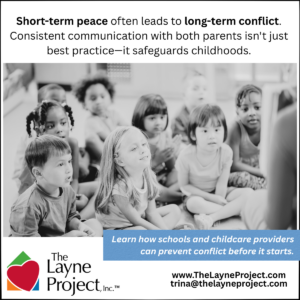
 Schools, childcare providers, and professionals working with children strive to create safe, supportive environments. Yet, when communication with co-parents is inconsistent, unclear, or one-sided, they risk creating confusion, conflict, and unintended harm to the very childhoods they aim to protect.
When both parents are not equally informed and engaged, the impact extends beyond just administrative challenges. It affects the child’s emotional stability, their trust in the school or provider, and their ability to thrive in a learning environment.
This is why clear, structured co-parent communication is not just about reducing professional headaches. It is about safeguarding childhoods.
 Why Most Co-Parents Feel Stuck
 Why Changing Behaviors Isn’t Enough
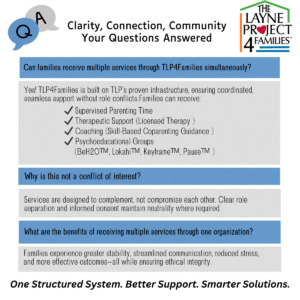 At The Layne Project (TLP) and The Layne Project 4 Families (TLP4Families), we are committed to safeguarding childhoods by providing families with the highest quality support through an intentionally designed, proven infrastructure.
 Start With Why: The Foundation of Successful Co-Parenting
 I have a confession: I love me some manifestation. Send out good energy, and that’s what you get back. Joe Dispenza? Yes. Bob Proctor? Of course. But recently, I stumbled upon Annie Duke, and let me tell you—she has officially joined my list of professional crushes. Alongside Diane Kander, she’s rocking my world with a different kind of thinking.
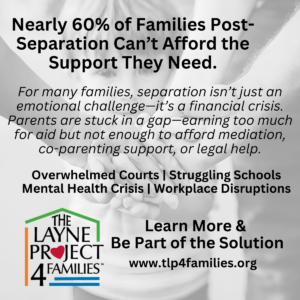 Separation is one of the most stressful life events for families—but what’s often overlooked is the financial strain that follows.
 I recently read All In Startup by Diana Kander, and I have to say—it completely blew my mind. The book presents an incredibly simple yet powerful idea: people don’t buy products; they buy solutions. Entrepreneurs often get stuck in the trap of having an idea, building the product, branding it, and then trying to convince customers to buy it. But the real key to success?